
Server modules for HybridForms

The HybridForms Server covers the complete form and workflow process. For specialized requirements, seven add-on modules are available: geodata from your existing GIS, a map server of your own, master data that updates automatically, PDF editing in the app, anonymous web forms, secure uploads from outside, and delegated user management.

Every module is fully integrated into HybridForms – no intermediate product, no second application, no separate login. You choose the modules independently of your edition and run them together with the HybridForms Server.

The seven modules at a glance

EnterpriseGeo

Map server integration: extended SDI connection, OpenLayers, ESRI, …

GeoServer

Your configured map server: an SDI server for your infrastructure, based on Open GeoServer.

CatalogSync

Updates from external data: secure periodic source sync, XSLT option, and stop safeguard.

AnnotatePDF

Editing right inside the HybridForms app: edit and fill in external PDF files, with sync.

ReachOut Server

Secure internet forms: extended workflow and web forms for anonymous internet users.

DataWasher

Security for external data: a secure container service for uploaded files (PNG, JPG, PDF, MP3, MP4).

GroupAdmin

Delegated self-service: add groups, users, and metadata, with Active Directory pick and sync option.

Which module fits you?

Tell us how you work – we will suggest which modules fit.

EnterpriseGeo: Maps, objects, and layers from your GIS/SDI server directly in the form

EnterpriseGeo connects your existing GIS or SDI server directly to HybridForms – ESRI/ArcGIS, GeoServer, and others. No intermediate widget, no second app.

  • Connection via the OGC standards WMS and WFS, with layers as well as bitmap and vector data
  • Retrieve and update GIS objects and write them back into your systems – the link between form and GIS is dynamic and bidirectional
  • Capture points, lines, and areas directly in the form
  • A static map snapshot is created automatically for PDF export and offline use
  • Display and labeling of maps and objects are freely configurable
  • Fast rendering on the device, even with extensive layers
  • Together with the GeoServer module, you keep internal and external scenarios separate

Your benefit: Your teams work on site with the same maps and objects as in the office – and whatever they capture in the field is back in your GIS right away.
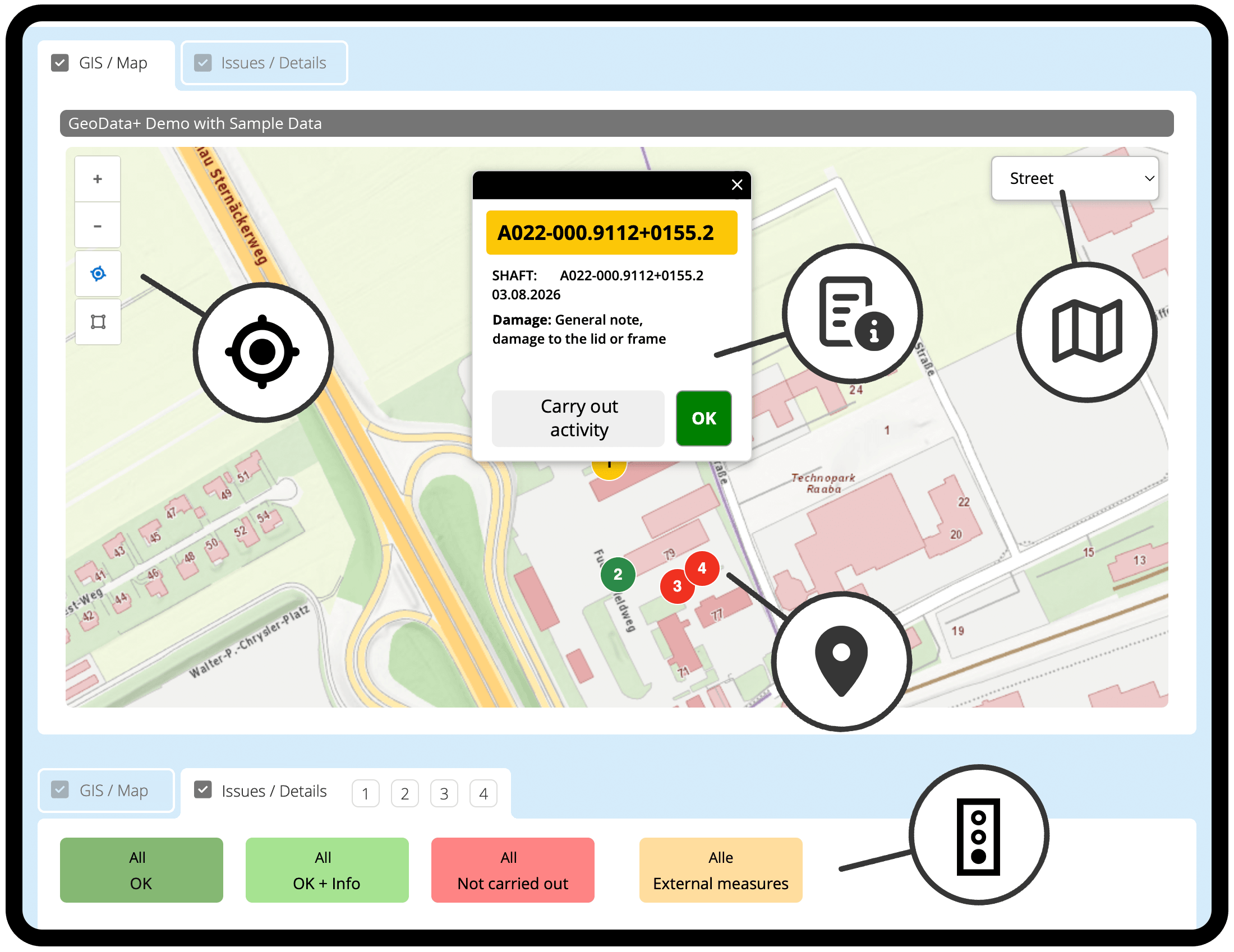
Form view with a street map, four color-coded manholes, and an open info window showing the manhole number, damage type, and the buttons to perform the task or confirm.

EnterpriseGeo inside the form: manholes appear as color-coded status points on your map. A tap opens the object data and the damage report – you confirm the task right in the form.
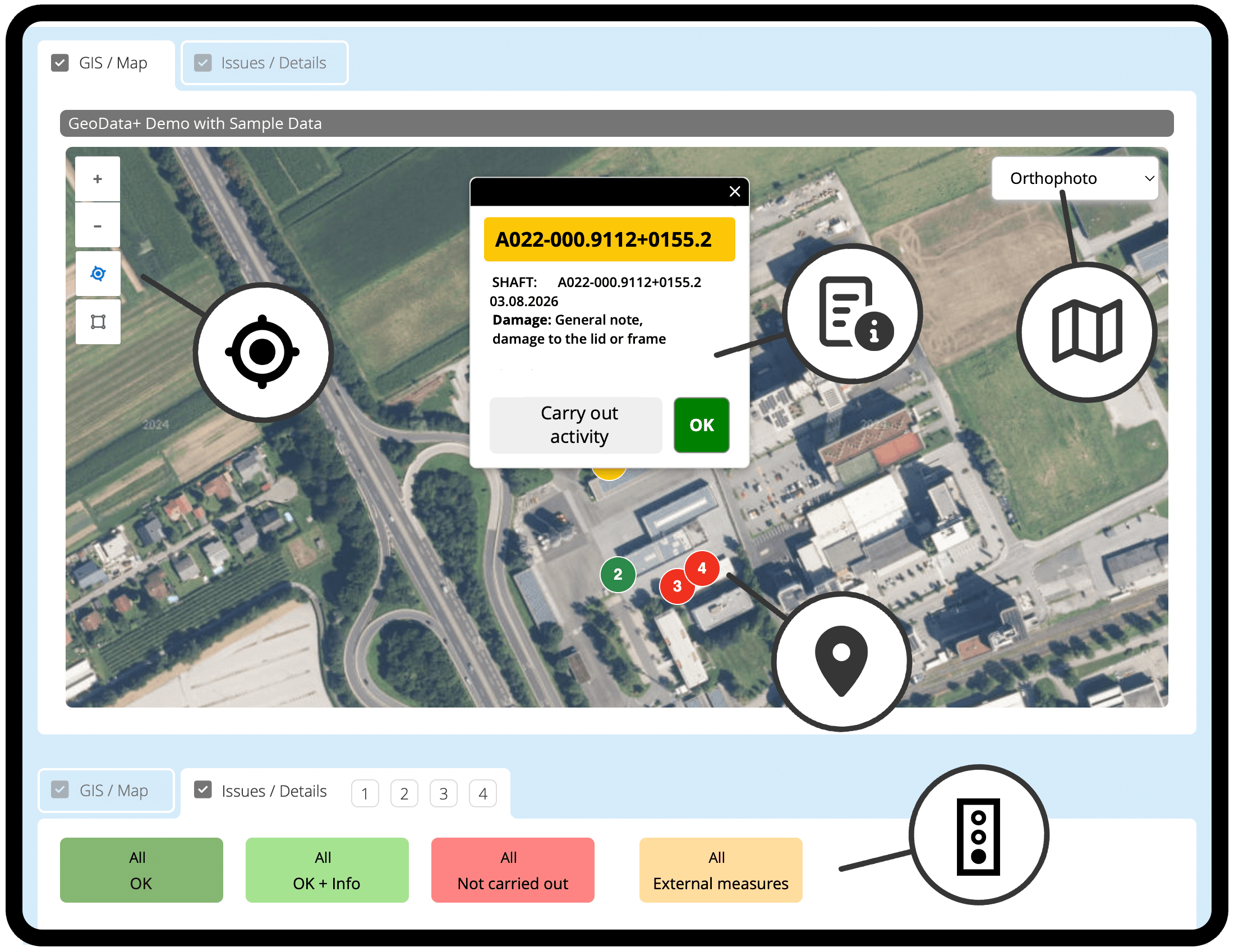
The same form view with an aerial image as the base map, the same four status points, and the open info window for the manhole.

The same objects on the orthophoto: you switch the base map in the dropdown, while positions and status stay unchanged.

GeoServer: Your own map server based on Open GeoServer

GeoServer provides a fully configured map server based on open source – for cases where no GIS infrastructure exists, or where external use has to be kept safely separate from internal data.

  • Fully configured open-source map server, run on-premises or in your Microsoft Azure environment
  • Manage and publish your own geodata and base maps centrally
  • Delivery via WMS and WFS with layers, bitmap, and vector
  • No dependency on external map providers or their licensing terms
  • Full data sovereignty – your geodata never leaves your infrastructure
  • Usable on its own or alongside an existing GIS infrastructure, to keep external use safely separate

Your benefit: A map service under your own control instead of dependency on external providers – ready to use alongside an existing GIS infrastructure as well.

CatalogSync: Keep master data up to date automatically

CatalogSync keeps catalogs such as product lists, address directories, or object data up to date automatically from external sources – and protects them from faulty imports at the same time.

  • Periodic synchronization at configurable intervals (for example 1, 7, or 30 days): add, delete, and update entries – without manual intervention
  • Guardrails detect faulty imports and stop before a catalog is damaged – based on version number (major, minor, and technical version) and degree of change
  • XSLT option for adapting and filtering the data systematically on every import
  • Admin function for manual import while the guardrails are temporarily disabled
  • Can be combined with manual uploads; synchronization can be enabled and disabled at any time
  • Each catalog can be enabled and configured individually
  • Configured base interfaces for authenticated connections to your data sources
  • Individual parameter control of the base interface for multiple catalogs

Your benefit: Better and more current data quality instead of outdated or diverging records – with noticeably less upkeep in day-to-day operation.
The same form view with an aerial image as the base map, the same four status points, and the open info window for the manhole.

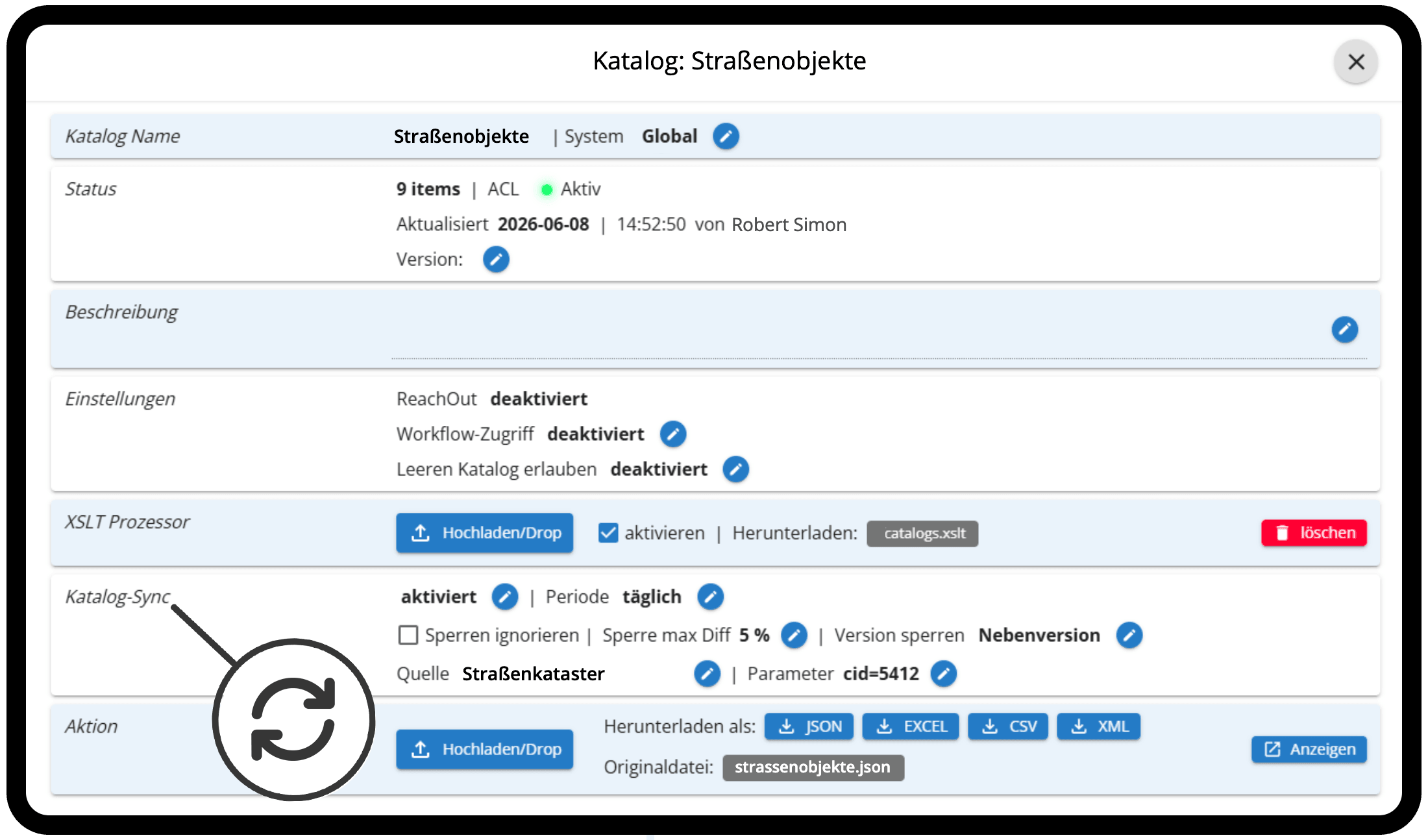
CatalogSync in the admin app: for each catalog you set the interval, the data source, and the threshold at which an import stops. The XSLT option adapts the data on every run.

AnnotatePDF: Edit PDF files directly in the HybridForms app and sync them with the server

AnnotatePDF lets you open, fill in, mark up, and annotate PDF files directly in the workflow of the HybridForms app.

  • Editing without downloading and without an external application
  • All changes are saved and continuously synchronized with the HybridForms Server
  • Offline support: PDFs can be provided and edited reliably in the field as well
  • Tools for text highlighting, shapes, callouts, inserting images, and redacting sensitive content
  • Document and form stay connected – no manual juggling of files

Your benefit: PDF files are edited directly in the HybridForms app – instead of going through download, third-party program, and re-upload, offline in the field as well.
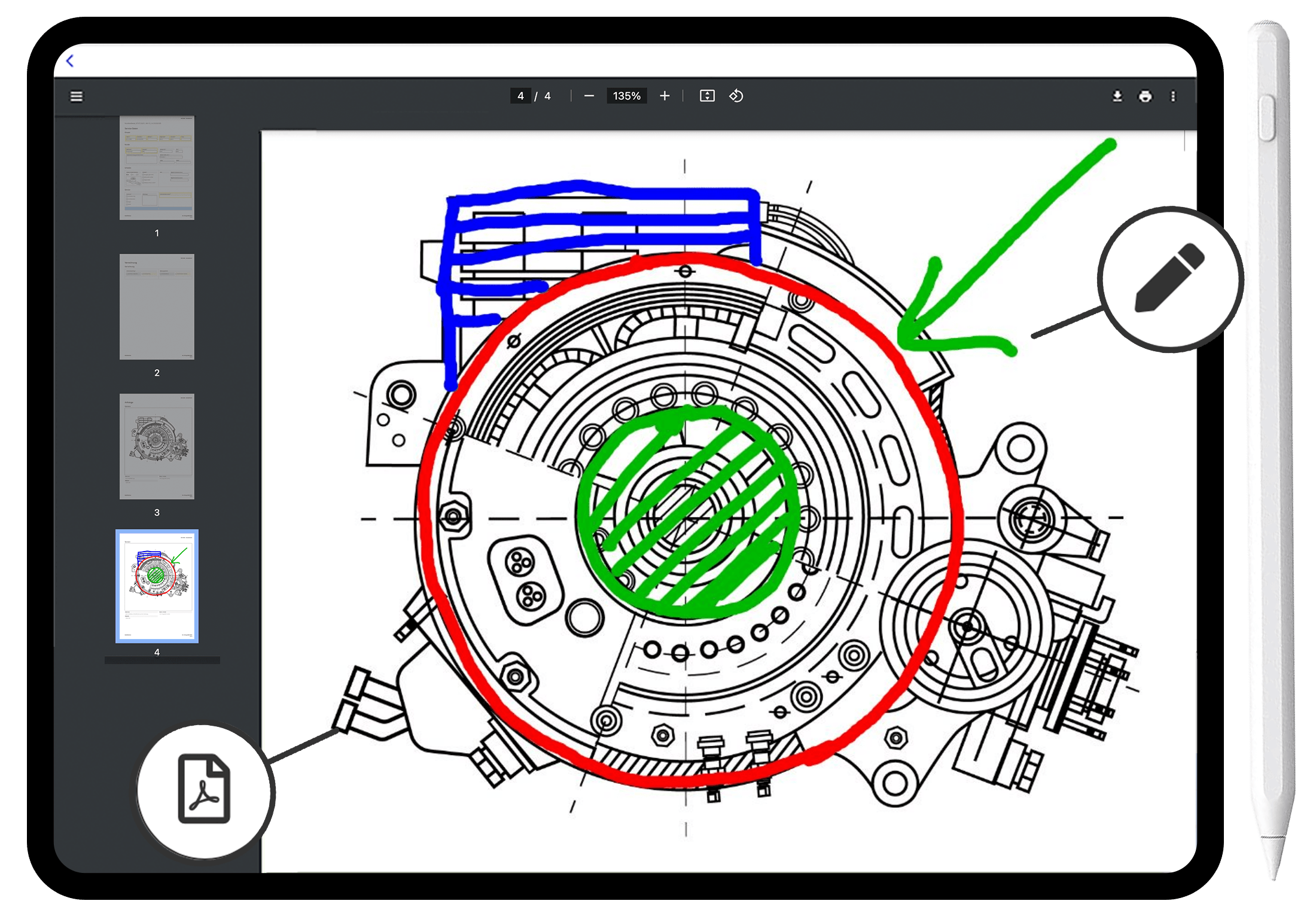
Tablet showing a PDF open in the HybridForms app: a technical drawing with handwritten markings in red, green, and blue, a four-page thumbnail panel on the left, and a stylus beside the device.

AnnotatePDF in the HybridForms app: a technical drawing is marked up with the pen right inside the form – circles, arrows, and highlighted areas, without downloading and without a second program.

ReachOut Server: Bring external people into internal processes securely via web form

ReachOut brings people without a HybridForms account and without any installation into internal processes – customers, citizens, patients, partners, or suppliers.

  • Selected forms can be filled in and submitted anonymously, that is without logging in, in the browser
  • A network-separated server validates the data and stores it encrypted; the validation rules run at the transition
  • Direct access to your internal infrastructure is technically impossible
  • Incoming data can be taken into the Stages workflow seamlessly and processed internally – the transition can be repeated as often as needed
  • Forms are cleaned of data at every handover between internal and external
  • For catalogs, you decide whether they can be retrieved externally
  • An end-to-end digital process: from web capture by users who are not logged in, through internal processing, to audit-proof archiving

Your benefit: External people without a HybridForms account are brought in securely – with full network separation and without any interface into the internal network.
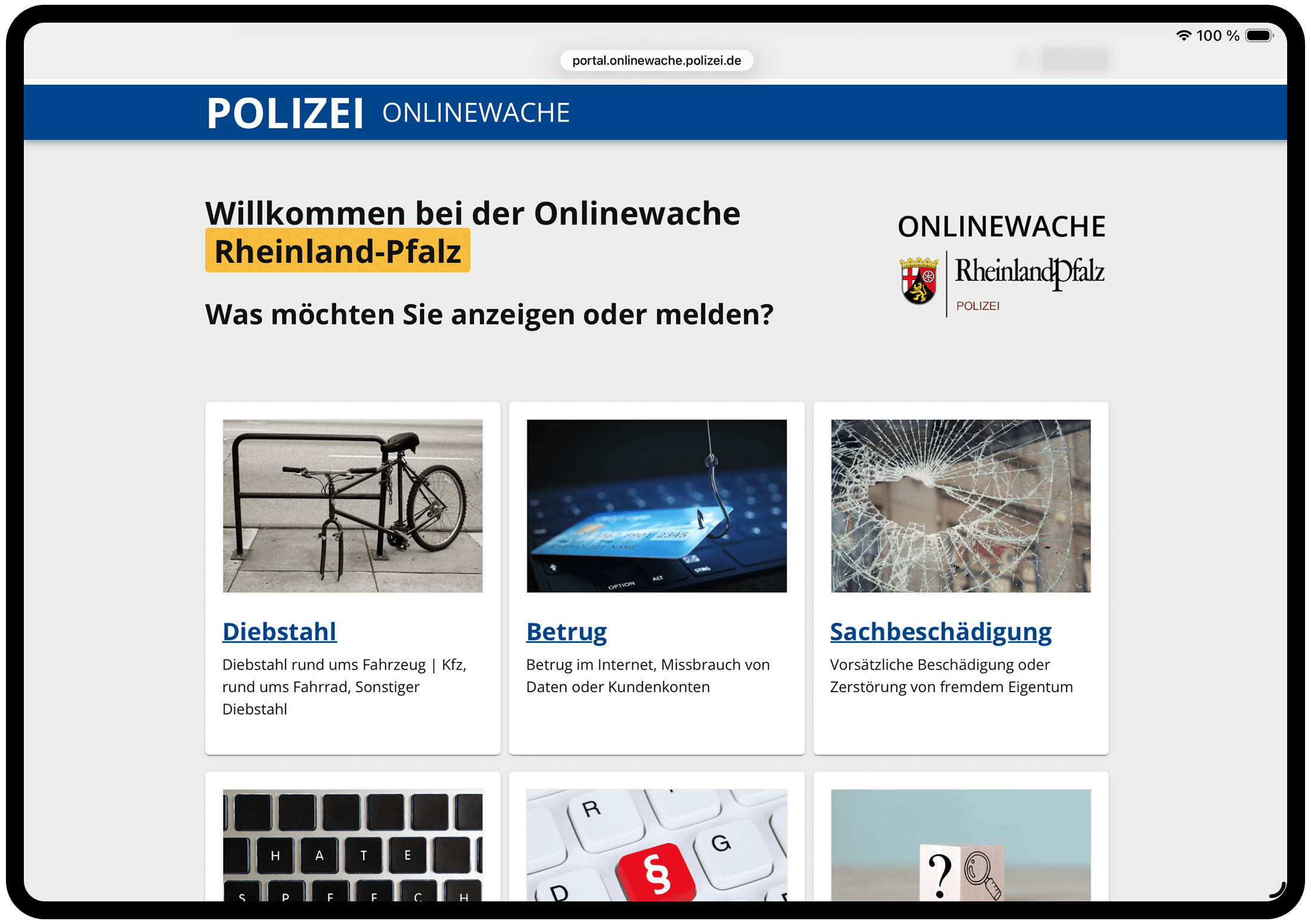
Start page of the Rhineland-Palatinate online police station showing the question about what to report and tiles for theft, fraud, and criminal damage.

An example of the ReachOut Server in use: in the online police station of Rhineland-Palatinate, citizens first choose the type of offense – each tile leads to its own form.
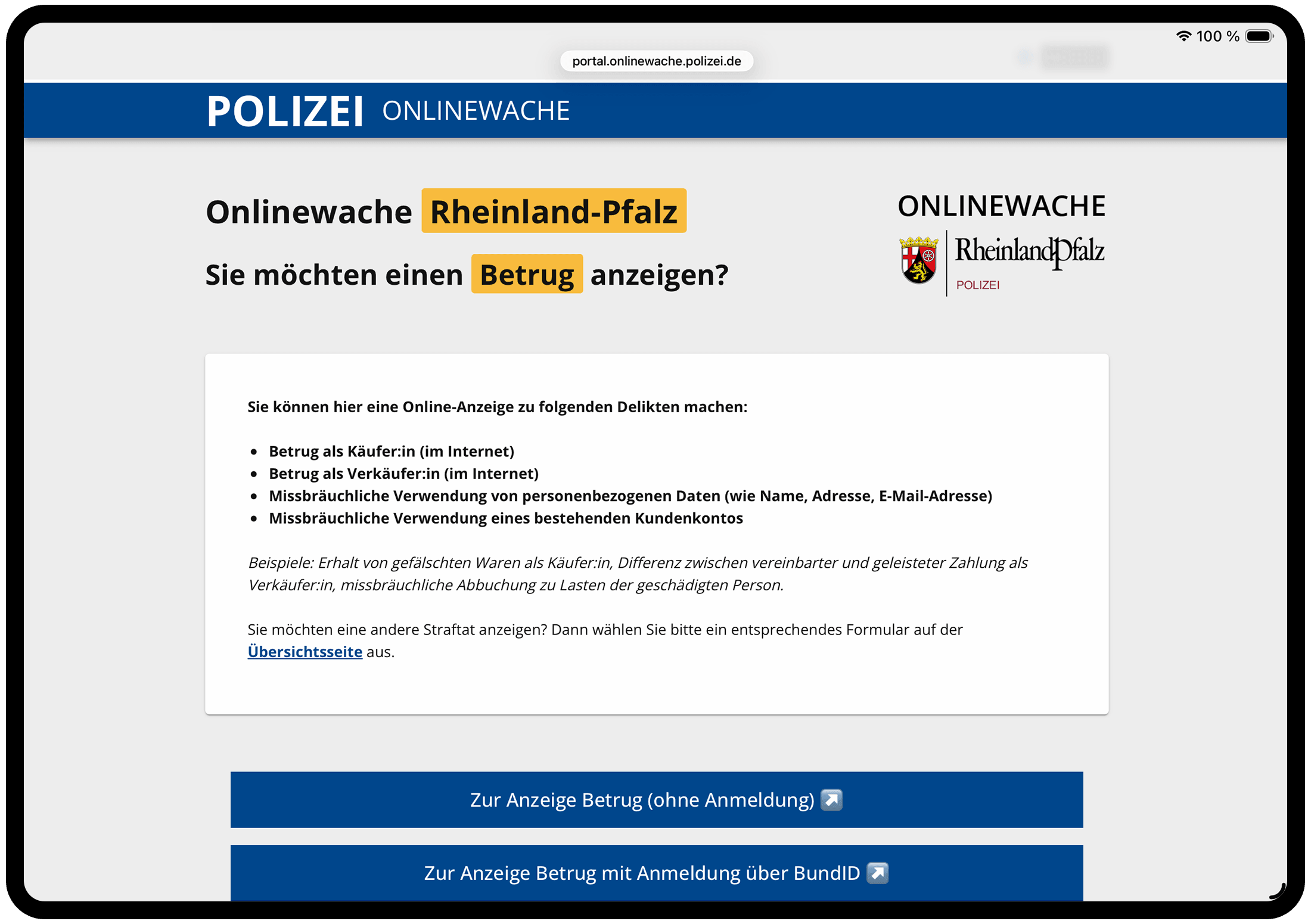
Page for reporting fraud, listing the reportable offenses and two buttons: file a report without login, or file a report with login via BundID.

Also from the online police station: the »without login« route is exactly what the ReachOut Server is built for. Those who prefer to log in use BundID, for example; both routes feed into the same internal process.

DataWasher: Make external uploads safe by regenerating them

DataWasher protects internal systems when external people upload images, PDF files, audio, or video. Every incoming file is completely rebuilt before it reaches the internal environment.

  • Supported formats: PNG, JPG, PDF, MP3, and MP4
  • Every incoming file is fully re-rendered and converted into a safe target format before it is passed on to the internal HybridForms system
  • Active content such as macros, scripts, or embedded objects is removed completely during the rebuild
  • Only clean data, free of scripts and injections, reaches the internal environment
  • The module acts as a secure container service between external submission and internal processing
  • The original files are stored separately and encrypted, and remain available for forensic purposes
  • The method has been proven in government use since 2019, handling several hundred thousand forms a year

Your benefit: External uploads reach the internal environment without malicious code and with the data fully usable – instead of becoming a gateway for scripts or injections.

GroupAdmin: delegated user and group management for large organizations in self-service

GroupAdmin takes the load off central administration in organizations with many departments, locations, or changing user groups.

  • Through a self-service portal, you create and manage groups and users directly in HybridForms
  • Assign authorized process templates and maintain metadata and meta users – which is not possible in Active Directory
  • Usable without an Active Directory connection as well; users and groups can be created, or picked from those that already exist
  • Maintain group-specific data for form processes and extended permissions for individual users
  • Optionally publish person assignments as dynamic catalogs for use in forms
  • Particularly suited to decentralized organizations with many responsible areas

Your benefit: Relief for central IT through delegated administration and clear responsibility in the departments.

Available with every edition

The modules are not tied to a specific edition. You add any module to the Business edition just as you would to Trusted.AI Enterprise and Trusted.AI Operator – and in the SaaS model to Shared, Shared.AI, and Dedicated. The edition determines AI capability and multi-tenancy, not which modules are available to you.